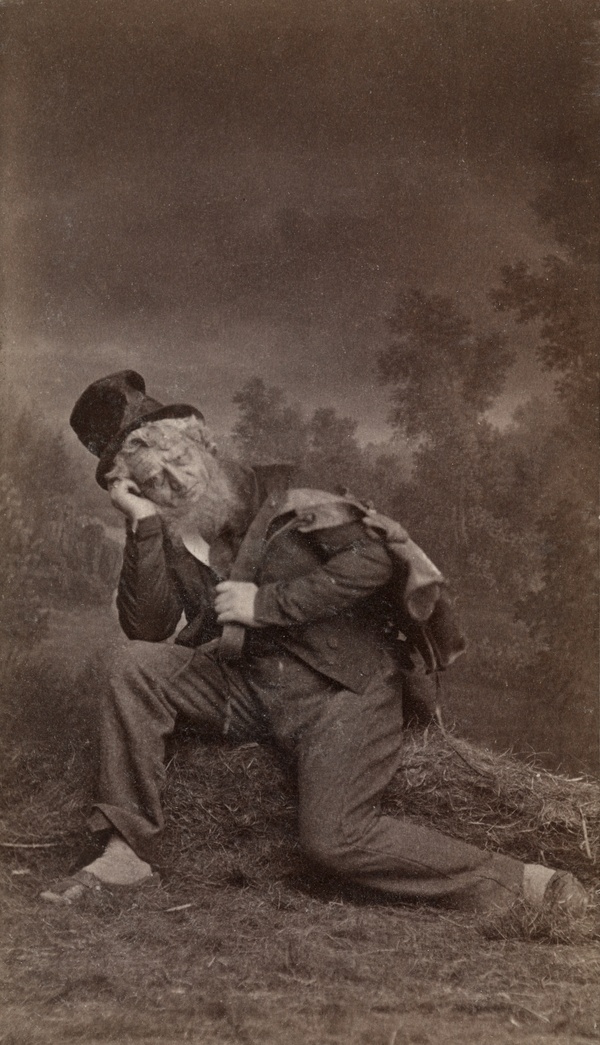
Ibsen & Grieg: The 1876 Premiere of Peer Gynt's Theatrical Power
"Peer, du lügst! Du lügst!" ("Peer, you lie! You lie!") – With these fervent words from a mother to her son, Henrik Ibsen's monumental play, *Peer Gynt*, thrusts its audience into a world of towering fantasy, profound self-deception, and an ultimately poignant search for self. This opening, delivered by Peer's exasperated mother Åse, sets the stage for a theatrical journey unlike any other, penned by the literary giant who is widely recognized as the
Autor Von Peer Gynt: Henrik Ibsen.
The year 1876 marked a pivotal moment in theatrical history. On February 24th, in Christiania (now Oslo), Norway, the collaborative genius of Ibsen and composer Edvard Grieg culminated in the premiere of *Peer Gynt* as a full-fledged stage play. What began as a dramatic poem – a literary work not initially intended for the stage – was transformed into an immersive theatrical experience, largely thanks to Grieg's evocative and enduring musical score. This premiere cemented *Peer Gynt*'s place as a cornerstone of Norwegian culture and a universal examination of the human condition, continuing to challenge and captivate audiences and directors alike more than a century later.
To truly appreciate the power of *Peer Gynt*, one must first understand the man behind the masterpiece. Henrik Ibsen, born in 1828, was a Norwegian dramatist whose realistic and often provocative plays reshaped European theatre. By the 1860s, Ibsen had experienced a period of personal and professional disappointment, leading him to self-exile in Italy. It was from this vantage point, far from the provincial constraints of his homeland, that his imagination found fertile ground for *Peer Gynt*.
Ibsen's inspiration for the character of Peer was rooted in genuine Norwegian folklore. He drew heavily from the "Norwegian Folk Tales" (Norske Folkeeventyr) collected by Peter Christen Asbjørnsen and Jørgen Moe, which featured a legendary figure named Per Gynt. Ibsen was convinced that "Peer Gynt has really existed," believing the character originated from an actual person living in Norway's Gudbrandstal valley in the late 18th or early 19th century. This grounding in local legend provided a rich tapestry for Ibsen to weave his narrative.
Crucially, the playwright saw reflections of his own life in Peer's fantastical adventures and evasions. Like Peer, Ibsen had experienced a "flight from the narrowness of home" – a personal resonance that infused the work with a deep, almost autobiographical, authenticity. He conceived *Peer Gynt* initially as a dramatic poem, published in book form in 1867. This came a year after the success of his dramatic poem *Brand*, which had finally brought him critical acclaim. However, the true theatrical potential of *Peer Gynt* lay dormant until Ibsen envisioned it for the stage, requiring a dimension that only music could provide.
*
Ibsen's Creative Process:
*
Research: Travelled to Norway's west coast mountains to research local legends.
*
Personal Connection: Identified with Peer's escapism and dissatisfaction.
*
Initial Form: A dramatic poem, not a play, published in 1867.
*
Breakthrough Context: Followed his acclaimed work *Brand*.
The Birth of a Theatrical Masterpiece: From Poem to Stage
The transformation of *Peer Gynt* from a literary work to a theatrical sensation hinged on a crucial collaboration. Recognizing the need for music to bring his fantastical and sprawling narrative to life on stage, Ibsen approached his compatriot, the renowned composer Edvard Grieg. Ibsen famously requested "the necessary music," a modest ask that would lead to one of the most iconic partnerships in theatrical history.
Grieg, initially hesitant about the project due to the play's unusual structure and its blend of realism, fantasy, satire, and tragedy, ultimately accepted the commission. He found the text challenging, but also deeply inspiring. His task was not merely to compose incidental music, but to craft a score that would guide the audience through Peer's kaleidoscopic journey, enhancing the emotional landscape of each scene. The collaboration was not without its difficulties; Ibsen's non-linear, often dreamlike narrative pushed Grieg beyond conventional operatic or theatrical scoring.
Yet, from this creative tension emerged brilliance. Grieg's score, with its haunting melodies, vibrant dances, and dramatic crescendos, became inseparable from Ibsen's text. Pieces like "Morning Mood," "Anitra's Dance," and "In the Hall of the Mountain King" have since taken on a life of their own, becoming some of the most recognizable classical compositions globally. They perfectly capture the diverse moods of the play: the pastoral beauty of Norway, the exotic allure of distant lands, and the primal fear of the trolls' lair.
The premiere on February 24, 1876, was a landmark event. With Grieg's captivating music weaving through Ibsen's poetic drama, *Peer Gynt* burst onto the stage, captivating audiences with its unique blend of adventure, philosophy, and spectacle. The production was an immediate success, establishing *Peer Gynt* not just as a great literary work, but as a powerfully immersive theatrical experience.
Peer Gynt's Enduring Theatrical Power and Modern Interpretations
What makes *Peer Gynt* so enduring, so relevant, even today? At its heart, the play is a profound exploration of identity, truth, and the human propensity for self-deception and escapism. Peer begins as a charming but irresponsible young man, inventing grand tales to escape a harsh reality defined by his father's alcoholism and the family's subsequent poverty. He dreams of becoming an emperor, desired by women and admired by men, constantly fleeing from one situation and one love to the next.
His journey takes him from Norwegian mountains, through deserts, to madhouses, encountering trolls, seducing women, and accumulating vast wealth, only to lose it all. Throughout these adventures, Peer famously lives by the motto "to be oneself," yet paradoxically, he constantly avoids genuine self-reflection. His ultimate realization, towards the play's end, is that his inner self is hollow, a mere onion with no core. This poignant discovery resonates deeply with audiences who grapple with questions of authenticity and purpose in their own lives.
The multifaceted nature of
Peer Gynt: Ibsen's Timeless Saga of Truth, Lies, and Escapism is precisely what challenges and excites contemporary directors. Is Peer merely a champion of escapism, as Christopher Rüping from Schauspielhaus Zürich suggests, forever fleeing responsibility? Or is he, as Jan Bosse staged him in 2009 with the exceptional actor Jens Harzer, an "explorer of knowledge," whose journey, however flawed, is a search for self-understanding?
Some modern interpretations even draw parallels to contemporary political figures, seeing Gynt's manipulation of truth and creation of "alternative realities" as a precursor to modern populist narratives. This flexibility in interpretation underscores the play's timelessness and its ability to reflect different societal anxieties across generations.
*
Why *Peer Gynt* Remains Challenging and Relevant:
*
Fluid Genres: Blends folklore, satire, social commentary, and philosophical drama.
*
Complex Protagonist: Peer is simultaneously charming, infuriating, relatable, and deeply flawed.
*
Open-Ended Themes: Identity, truth, escapism, materialism, and self-discovery.
*
Demands on Production: Requires imaginative staging and a nuanced portrayal of Peer's journey.
For anyone looking to delve into this theatrical powerhouse, here are a few practical tips:
- Experience it Live: If possible, attend a theatrical production. The combination of Ibsen's dialogue and Grieg's music is truly immersive.
- Listen to the Music: Even without the play, Grieg's Peer Gynt Suites (often performed as two separate orchestral suites) offer a magnificent introduction to the play's emotional spectrum.
- Read Different Translations: Ibsen's poetic language can vary significantly between translations, offering different nuances to Peer's character and philosophical dilemmas.
- Explore Critical Analyses: Understanding the various interpretations can enrich your appreciation of the play's complexity.
Conclusion
The 1876 premiere of *Peer Gynt*, orchestrated by the brilliant collaboration of Henrik Ibsen and Edvard Grieg, was far more than just a theatrical event; it was the unveiling of a profound cultural touchstone. Ibsen, the ingenious
Autor Von Peer Gynt, crafted a narrative that, despite its fantastical elements, directly addressed universal human struggles with identity, truth, and the often-tempting allure of illusion. Grieg's unforgettable score elevated this already powerful text, transforming it into an experience that resonates deeply in the soul.
Today, *Peer Gynt* continues to stand as a testament to the enduring power of theatre to hold a mirror up to humanity. Its themes of self-discovery, escapism, and the consequences of a life lived without genuine connection remain as pertinent as ever. The legacy of that February night in 1876 is not merely a play with accompanying music, but a timeless saga that challenges us all to look inward and ask: "Who am I, really?"